By the late 1990s America was becoming terminally online. Internet users, once decried as “net heads” or “techno nerds"[1], were becoming more common as the internet was set to become the fastest growing communications technology ever. It was not only viewed as a financial imperative to connect America but also a political one. Al Gore, the inventor of the internet, even stopped his campaign against “paid TV” (ie cable tv) once he realized those cable TV lines would be instrumental in the Clinton admin’s goal to connect Americans to the information superhighway, and give schools “computers that exceed the power of those at NASA“ [2]. Which I assume refers to Apple IIs.

With all of this hype many people are likely aware of of the resulting .com bubble in which wall street over speculated on basically any internet focused company (or any company simply pretending to do so) greatly inflating stock values for companies which had no profitability with the creation of strange financial metrics like “eyeballs” viewing the site.

What is less talked about is the hardware side of the business. In order to facilitate “eyeballs” actually viewing sites, people needed to have broadband lines wired to their house and existing telecom companies were the best poised players to take up such a task.
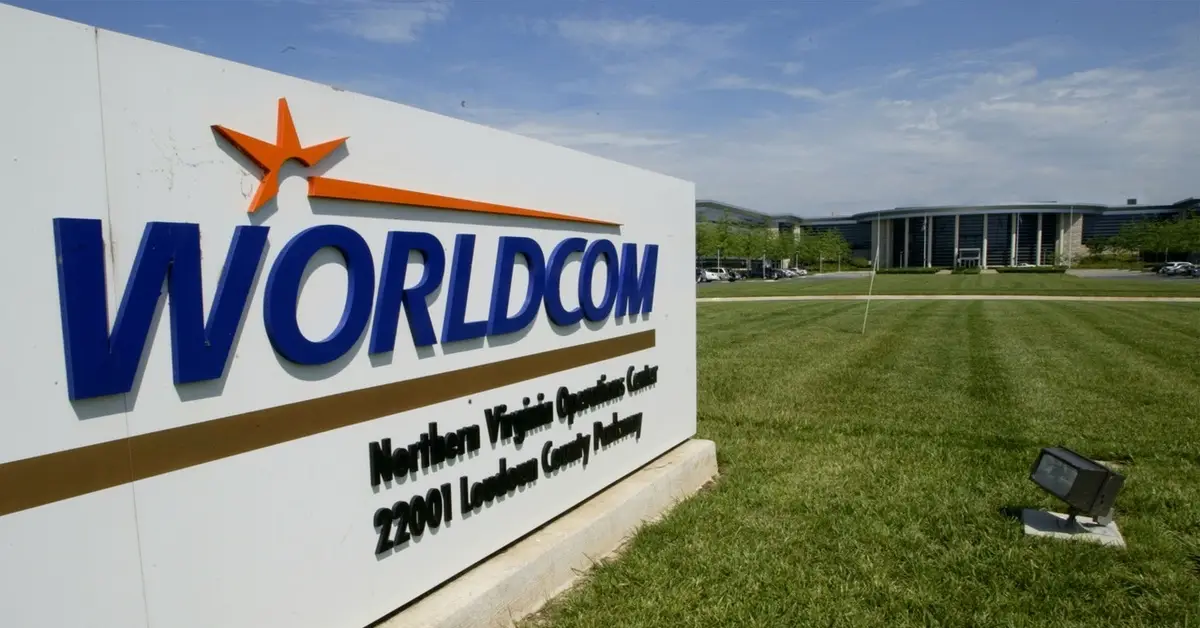
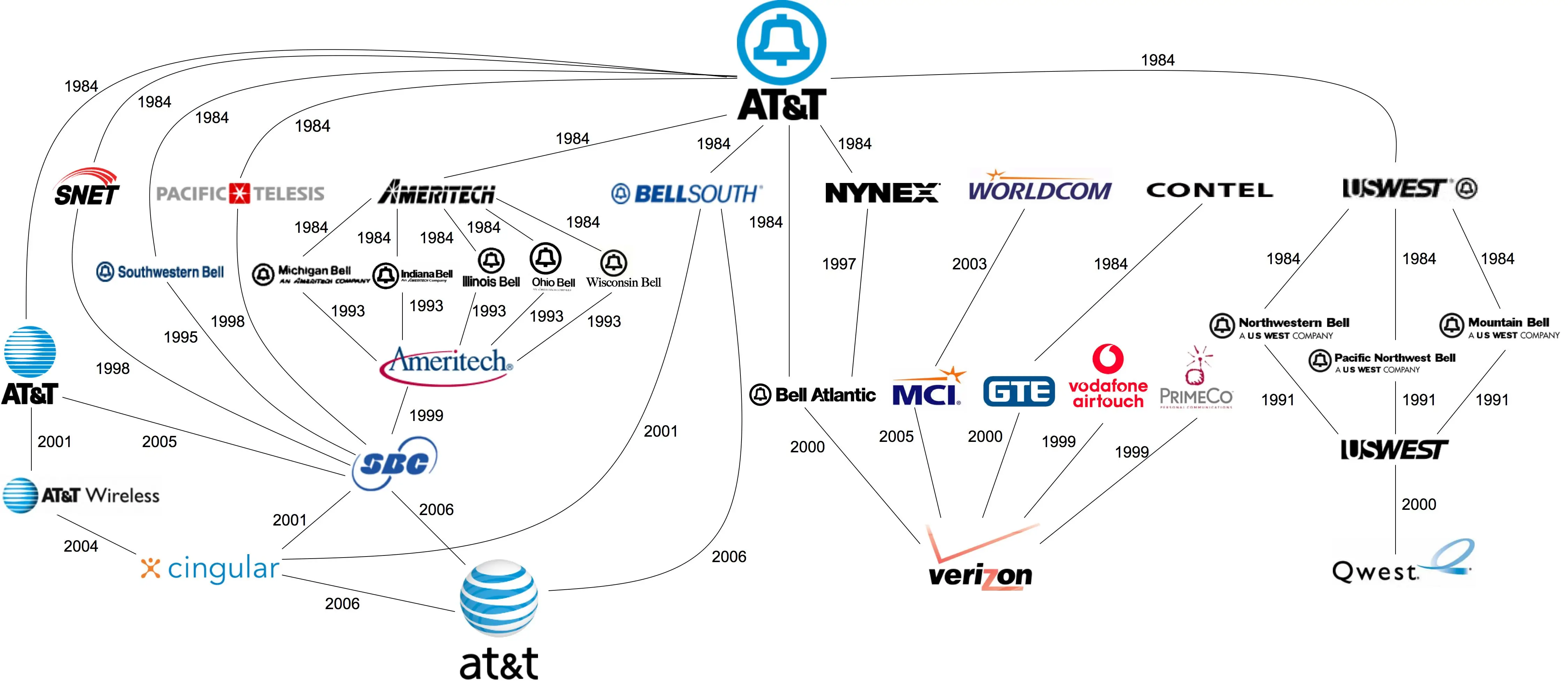
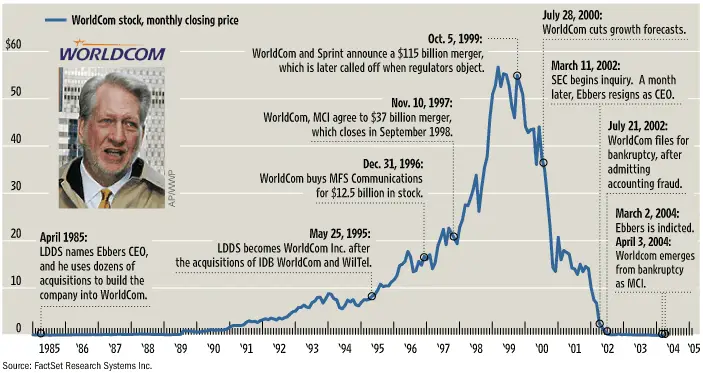
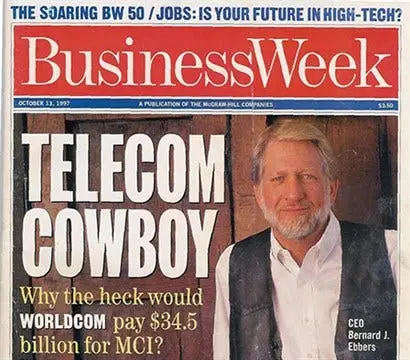
Despite the US breaking up Bell Labs in the early 80s, the telecom industry was quickly reconsolidating. By 1996 further deregulation allowed for many of the baby bells to remerge, which allowed AT&T to again become the largest internet provider. In second place was newcomer, WorldCom, who had acquired over 60 regional telecom firms by 1995. Founded as Long Distance Discount Services, Inc. by Bernard Ebbers in 1985, Worldcom quickly grew through more and more mergers. In 1996 it merged with MFS to gain access to UUnet, one of the first and largest isps. Then in 1998 it merged with MCI communications whose mail server and domain, MCI.net, served as crucial early internet backbones.
Setting itself as the foremost broadband company WorldCom became one of the new darlings of late 90s Wall Street along with Enron. The frenzy, and reward, to lay down new broadband cables reached a fever pitch in 1998 when UUnet CEO, John Sidgmore, began claiming the number of internet users was doubling every 100 days. WorldComs technical leadership were considered experts on the growing technology and their claims were treated as gospel by the media. This doubling rate of 3.5 months was repeated across news sites and the Commerce Department. [3]

This drove the frenzy further and by 1998 broadband and internet technologies: were outpacing the general stock market by two fold, made up 40% of US GDP growth, had workers paid a whopping $46,000 on average, and with 62 million Americans already online the market could only get larger. Analysts reported that the internet would facilitate over $300 billion in businesses to businesses scales and greatly reduce costs, as companies could do a lot more with less people.
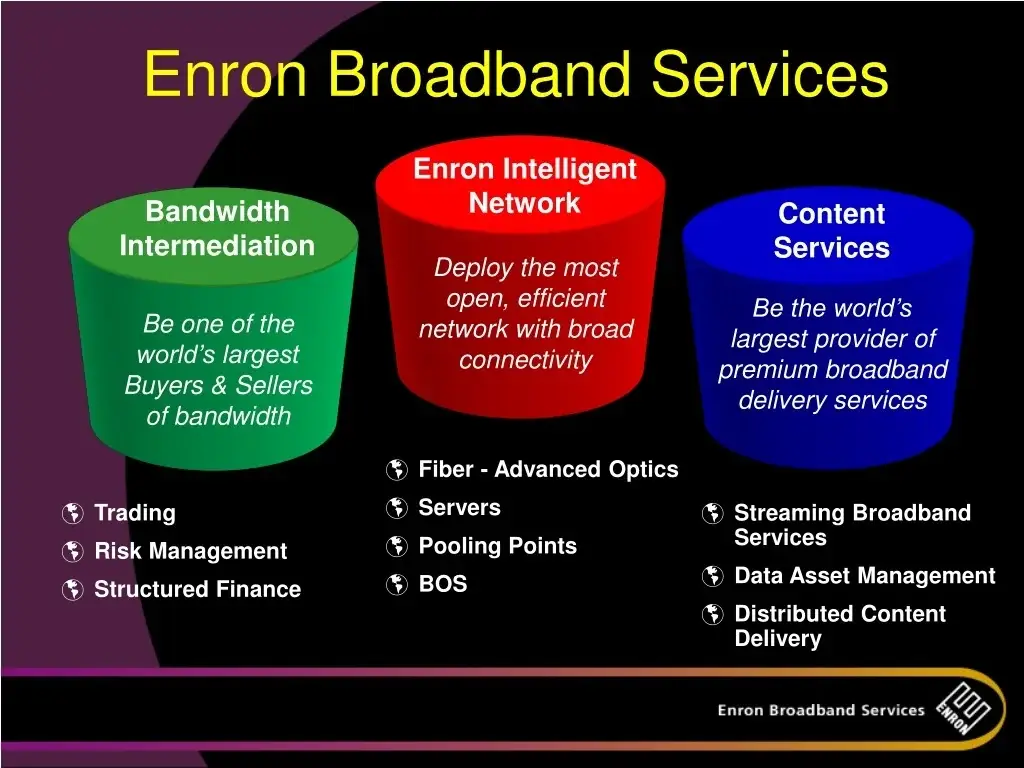
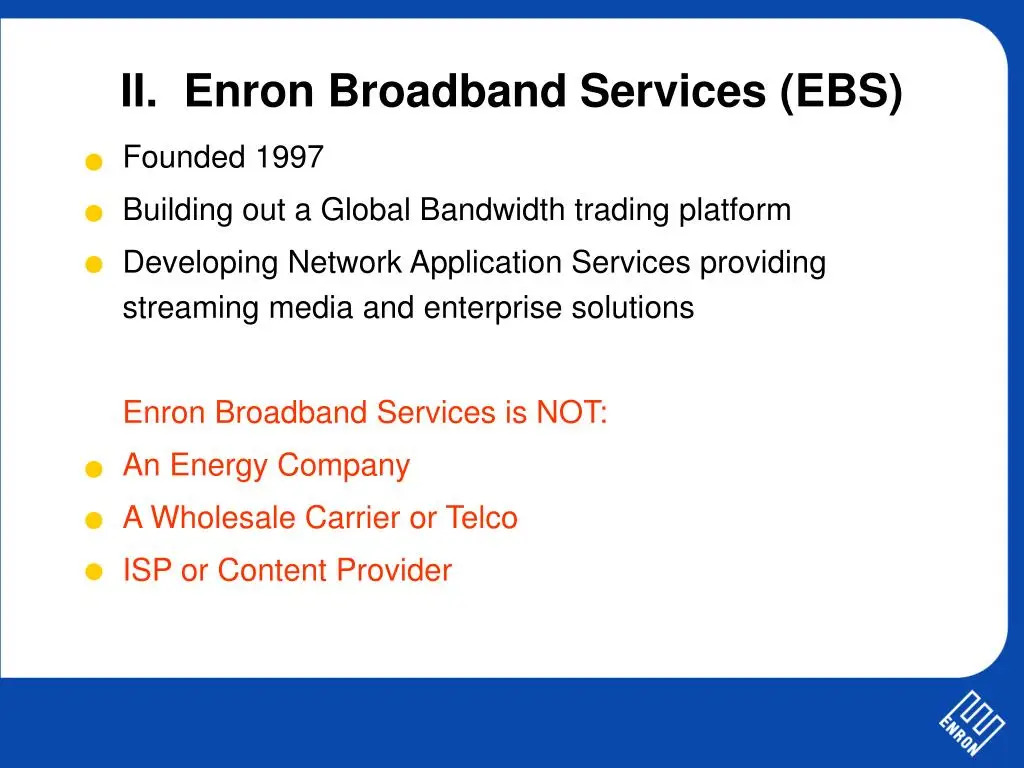
Many other companies rebranded themselves as technology and broadband companies to meet the hype. Enron started its own $40 billion dollar fiber optics division planning to build enough bandwidth to facilitate a movie streaming service with blockbuster and to financialize the sale of unused bandwidth as they had other utilities[4].
Feeling the pressure to keep up with the seemingly boundless demand WorldCom was serving, other telecommunications companies began picking up the slack. To backfill this demand AT&T began mass laying broadband cable at a peak of 2,200 miles an hour.
Still neither AT&T nor Sprint could match WorldCom. The company seemed to be the perfect model for American capitalist efficiency boosting record profits and minimal costs, despite its heavy buildout. To attempt to reach those same levels, AT&T and Sprint laid off tens of thousands of employees to afford more hardware while keeping operating costs low. [5]
By 1999 WorldCom’s stock reached a high of $2,612, and it was only down hill from there. When the Dotcom bubble burst in 2000 it took down most of the broadband industry with it. At the same time financial analyst, Kim Emigh, was fired for refusing to mark employee payroll as a capital expense rather the operating costs. Things would only get worse in 2002 when the board fired CEO, Bernard Ebbers, for his continued inability to salvage the company and the president began a covert internal audit of the company.
The entire company had been a lie. The first and most obvious lie, the 1000% yearly growth rate of US internets was completely made up. If there were roughly 60 million US internet users in April 1998 then there would be over 1 billion US citizens online by the year 2000. Still somehow business experts managed to misunderstand a basic exponential.
The numbers came from a UUnet internal model created by employee Tom Stluka, which assumed the best case growth from last years continued forever. This lie was maintained by UUnet who would lay cable with bandwidth far exceeding user plans and count the excess bandwidth as separate users. An eventual AT&T study found that a small blip of extreme growth in 1996 and 1997 likely biased Stluka’s model, and that the internet did grow at a yearly rate of 100%. Which is still quite good, but the infrastructure needs of 100 is far different then 1000. [4][5][6]
Even worse was the fact that WorldCom’s financials were totally fake. Those seemingly impossible cost to profit ratios other companies chased? Completely made up. From 1999 to 2002 the CEO, CFO, and head accountant had been cooking the books to maintain WorldCom’s stock price. Compared to Enron’s Byzantine empire of fraudulent financials, WorldCom was shocking simple. They simply booked operating costs as capital expenses to decrease their overhead and invented fraudulent transactions to buff up profits. Their third party auditor who signed off on these fake books? Arthur Anderson who has recently gone bankrupt due to also being bullied by Enron into signing off on fraudulent transactions. Once all was said and done it was found that WorldCom had fabricated $11 billion dollars in fraudulent profits, making it the largest financial crime ever at the time. [8]
For their part, also Enron committed massive broadband fraud. Their fiber optic cables were often low quality, barely functional, and had far lower bandwidth than what was promised. With most of their impressive video streaming demos being shams where videos were played back from local servers rather then over any network. Blockbuster quickly pulled out of their VOD deal when movie studios wouldn’t sign on and Enron failed to materialize many of their promises.
WorldCom left the telecommunications industry in ruin. Many smaller players simply died out when wall street stopped funding their overextended buildouts, and the remaining legacy players were saddled with low quality and underutilized bandwidth and cable, whose price had crated. They had lost a lot of money and people chasing a fiction. Much of the fiber actually laid would have to relaid later anyway due to low quality. WorldCom employees had their net worth obliterated overnight due to the stock cratering to $2.34 a share, along with back pay and pensions vanishing in the bankruptcy proceedings. [9]
The triple whammy of Enron, WorldCom, and Tyco in 2002 lead to the passing of the Sarbanes–Oxley Act, which places additional regulations on how publicly traded companies disclose their finances and get audited. This angered many in the industry who felt WorldCom and Enron had allowed many of their deregulation victories from the past decades to be rolled back, as the public lost confidence in the magical efficiency of a deregulated Wall Street.

MCI executives would later take back over the bankrupt WorldCom and sell it to Verizon where it is today.
In unrelated news: https://archive.is/IgY4W

[1] https://m.youtube.com/watch?v=YHKGUu2gaOg&pp=ygUWQW9sIG91dGFnZSBuZXdzIHJlcG9ydA%3D%3D
[2] https://www.cnn.com/ALLPOLITICS/1998/05/18/time/gore.html
[3] https://www.sfgate.com/news/article/Internet-Use-Is-Doubling-Every-100-Days-Digital-3009366.php
[4] https://www.datacenterdynamics.com/en/analysis/the-unmaking-of-enron-broadband/
[5] https://www.nbcnews.com/id/wbna3072795
[6] https://www.lightreading.com/business-management/did-worldcom-puff-up-the-internet-too-
[7] https://www-users.cse.umn.edu/~odlyzko/doc/internet.growth.myth.pdf
[8] https://www.sec.gov/Archives/edgar/data/723527/000119312504039709/d10k.htm